



Being a role model for screen use
26 October, 2022 • Par Laurence Morency-Guay
The best way to instil healthy screen habits in children is, of course, to lead by example! Laurence Morency-Guay, a psychology professor and child development specialist, offers a few strategies for putting good screen habits in place.
Less screen time for kids
The recommendations for screen use at a young age are fairly strict, which is a good thing given the negative impact prolonged exposure has on children's development. The consequences are greatest in the language and cognitive areas for little ones who regularly use tablets and phones or watch a variety of shows. Screens provide such intense stimulation that they end up wrecking executive functions that are still developing: attention, memory and language skills, among others, end up impaired and diminished, which underlines how important it is to control screen exposure.
Less screen time for parents
It will be that much harder to help children develop healthy screen habits if their own parents are constantly behind a computer or a phone. Adults have the excuse of being far less affected than children by screen exposure, but it's still important to think about how we use screens so we can guide children toward good habits, since we act as role models. Social learning is very powerful: children watch their parents and copy their behaviours. They're interested in whatever occupies us, and they'll want to give screens as much attention as we do if screens are an integral part of our daily environment.
Here are a few tips for putting better screen habits in place and limiting children's access to screens:
- If possible, don't have a TV in the family room. Either keep it in a cabinet that closes or put it in a less-used room. That way, turning it on at the slightest opportunity is less convenient, which will reduce the habit of watching it.
- Set specific times to watch a show (as a family) and stick to those periods so you don't lose track of screen time.
- Plan your own viewing for when the kids are in bed or outside: this lets you dedicate family time to more enriching activities and fully enjoy that time for yourself.
- Keep computers in designated rooms, such as an office, if possible. That way, you avoid stretching out work periods and working in front of the kids.
- Don't keep phones within reach when you're at home. You're then less inclined to check social media and email and to handle devices in front of the kids.
- Put tablets away in a drawer and don't let children under 5 use them to “play”. There is no truly educational activity for toddlers on tablets, so we avoid offering them to handle one. School-age children will sometimes have schoolwork-related activities to do and can use them when needed, but we prioritize activities in books, in workbooks or that allow real sensory exploration for little ones, since all of that is what will contribute to their healthy development.
Of course, this list isn't exhaustive and is mainly meant to inspire you to change your habits. Take these tips and apply them to your family's reality, your personal context and your living environment: only you know what makes you comfortable as a parent!
This blog post is part of our special feature “Managing Screens.” To see all the content in this feature, which offers tips and advice to make managing screens at home easier, check out this article!
Put these tips into practice
Get the whole family organized with Octave
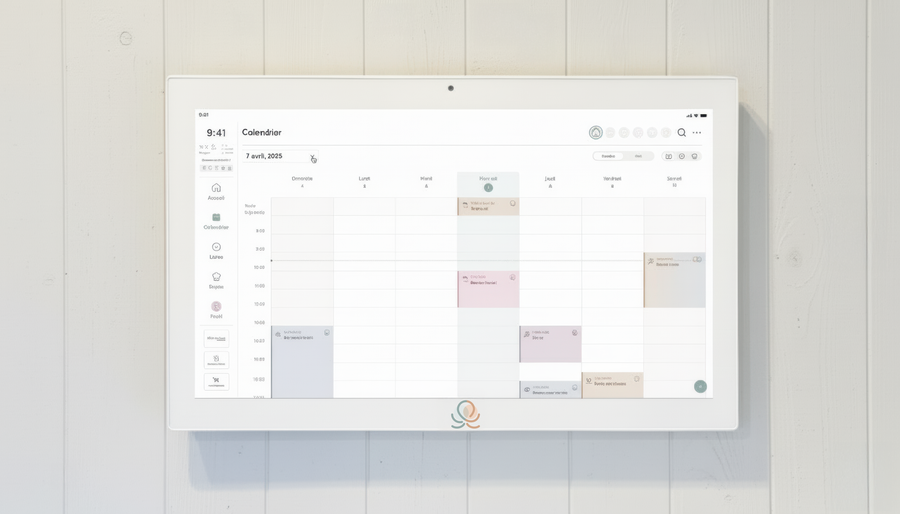
Meals, chores, the calendar and routines for the whole family in one place: on everyone's phone and on the Station on your wall.
The app is free on iOS and Android.