



Preventing summer learning loss
30 June, 2026
It's a well-documented phenomenon in education: after two months of vacation with no contact with school learning, many children arrive in September with gaps they didn't have in June. This situation is often called “the summer slide,” and even though its extent varies from one child to another, the phenomenon is real and can affect the start of the next school year. The good news is that you don't have to turn summer into a school term to fix it. A few simple habits, woven naturally into daily life, are enough to maintain what they've learned without depriving children of the rest and freedom they need.
Understanding what's really at stake
The summer slide doesn't affect all learning in the same way. The most vulnerable skills are reading, particularly fluency and comprehension, and math, especially automatic skills like mental math and multiplication tables. More conceptual knowledge and general thinking skills hold up better to a two-month pause.
Focusing your efforts on these priority areas is therefore more effective than trying to cover every subject. A child who reads regularly and does a few mental math exercises over the summer arrives in September in noticeably better academic shape than one who hasn't touched a book or pencil from June to August.
Reading: the most valuable habit
If you can only put one habit in place this summer, bet on reading. Reading regularly, ideally every day, even 15 or 20 minutes, maintains fluency, enriches vocabulary and builds comprehension in a natural, enjoyable way.
A few ways to make reading appealing over the summer:
- Let the child choose what they read freely: comics, graphic novels, joke books, magazines about their interests, without judging the format or the level
- Sign up for your local library's summer reading program: often free, fun and motivating for kids
- Create a cozy reading nook outdoors: a blanket in the yard, a hammock, a cushion on the patio
- Read in front of your kids yourself: parents who read generally raise kids who read
- Organize book swaps with friends or family members
Math: maintaining the automatic skills
Forgotten multiplication tables, rusty mental math, basic operations that trip them up: these are often what slows kids down at the start of the year. Maintaining these automatic skills doesn't require sometimes boring workbooks. There are far more enjoyable ways to keep the math brain active:
- Board games that involve calculating, like the classics Monopoly, Yahtzee or simple card games
- Mental math challenges built into daily life: how much does it cost if we take two, how long until we get there, how much is it if we split it into equal parts
- Fun math apps: in reasonable doses, they maintain what they've learned without feeling like school
- Cooking: weighing ingredients, doubling a recipe, calculating cooking times
Weave learning into daily life
Preventing the summer slide doesn't have to look like school. It can slip naturally into ordinary summer activities:
- Write a postcard to a friend or to grandparents
- Keep an illustrated summer journal
- Follow the weather and record the temperatures
- Plan an outing or a simple budget
- Visit museums, exhibits or historic sites
Finding the right balance
It's important to respect the line between maintaining what they've learned and turning summer into a school chore. A child forced to do exercises during their vacation develops a negative relationship with learning, which is precisely the opposite of the desired result.
The goal isn't to recreate school at home, but rather to keep the brain moving, maintain a few key habits and use summer to explore different kinds of learning, freer, more chosen and more tied to the child's real interests.
A last word on confidence
A child who arrives in September with a few gaps is, of course, not a lost child. Teachers expect a reactivation period at the start of the year and set aside time for it. So the goal of summer isn't to aim for academic perfection, but to limit the setback so that back-to-school feels like momentum rather than catching up. And that's well within your reach, without sacrificing the freedom and lightness that summer deserves. 📚☀️
Put these tips into practice
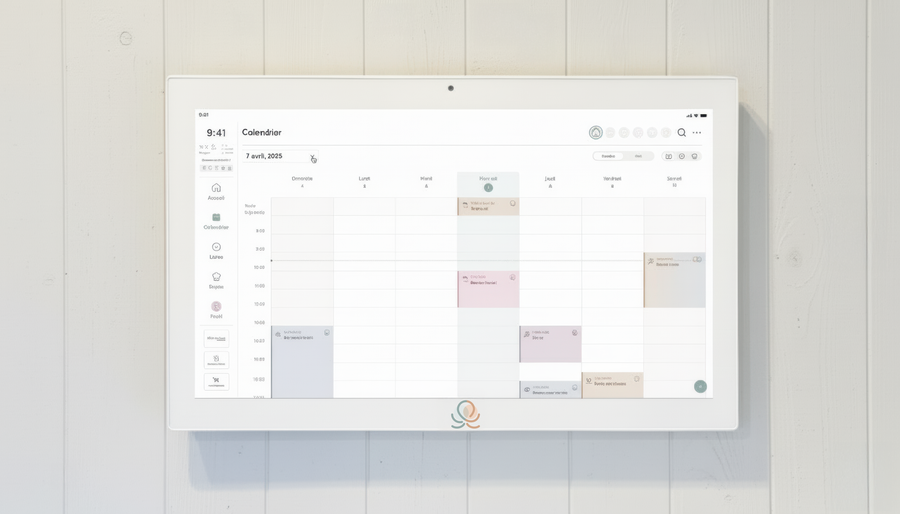
Get the whole family organized with Octave
Meals, chores, the calendar and routines for the whole family in one place: on everyone's phone and on the Station on your wall.
The app is free on iOS and Android.