

Sick or faking it? An agreement for personal days off school
04 October, 2017
As a kid, didn't you ever pretend to be sick so you could stay home? When I was little, I used a foolproof trick I'd picked up from the movie E.T., where young Elliott holds his thermometer against a light bulb to make his temperature shoot up. My thermometer showed a 48-degree Celsius fever, and my mother still sent me to school that morning.
I promised myself I'd find a better trick next time. So I tried stomach aches, headaches and other ailments nobody could check. My new strategies worked so well that, as an adult, I was still using them at my first jobs. On top of costing society and my employers money, these phony excuses also brought me a load of anxiety, guilt and low self-worth. Deep down, I knew it wasn't very honest of me.
When my oldest started elementary school, he was suddenly struck by a strange ailment that kept him from moving, but only when I was in the same room. That's when I promised myself that my kids wouldn't get caught up in this cycle of lies and pretending. There were too many downsides for the meagre short-term benefits they'd get out of it. So my partner and I agreed on the best strategy: the boys would be entitled to personal days off during the school year.
Here, then, are the clauses of our family agreement on personal days, largely inspired by how things work in the workplace. Each child gets two personal days per school year.
1. Any unused days can be cashed in at the end of the school year, at $5 per day.
2. A day off must be planned ahead and approved by a parent, depending on availability.
3. It can't be requested the same morning.
4. It can't be used to get out of a quiz, an exam or a presentation.
5. It can't be taken during the first 30 or the last 30 days of the school year.
On their day off, the child is free to do whatever activities they like to keep busy and have fun. On the other hand, on a sick day, they have to do everything they can to get back on their feet as quickly as possible. That means spending the day in bed, with a book as their only entertainment.
This family agreement on personal days lets our kids experience and discover a number of things for themselves:
- Education is an important value in our family
- Their physical and mental well-being is taken seriously
- Planning goes hand in hand with having fun
- Lying doesn't pay
- Being sick is no fun
- Choosing between time and money isn't always easy
- Delayed gratification has its advantages
- Instant gratification has its drawbacks
My kids are now in Grade 6 and Grade 4. Between my two boys, the total number of real sick days since kindergarten is no more than five. As for personal days, it costs us between $5 and $15 at the end of the year to pay out the unused ones. In other words, they're rarely sick and rarely absent from school for personal days. So I truly believe that giving them the freedom to choose has helped them become more independent and develop their sense of commitment and responsibility.
Would you like first access to all the content published in the Magazine each month, plus our Toolbox, which includes, among other things, free downloads that are as practical as they are fun? Subscribe to Belles Combines Magazine today!
Put these tips into practice
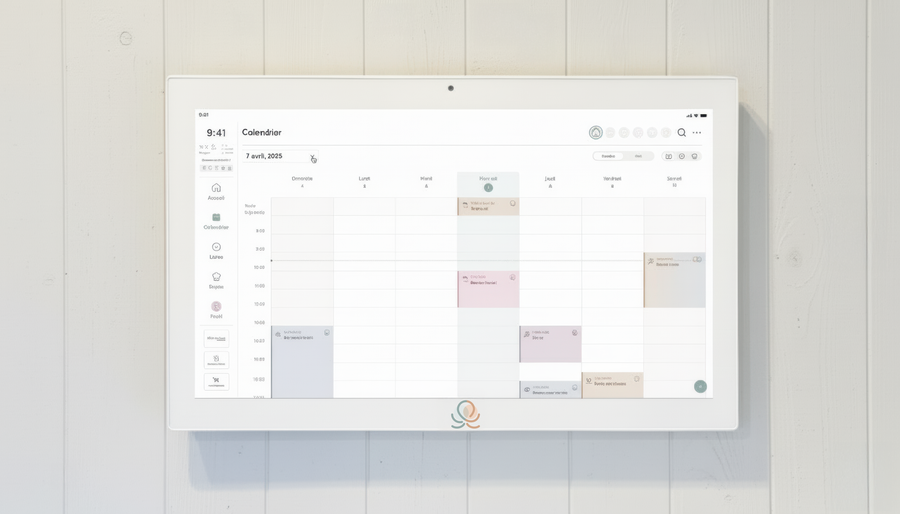
Get the whole family organized with Octave
Meals, chores, the calendar and routines for the whole family in one place: on everyone's phone and on the Station on your wall.
The app is free on iOS and Android.