



Teaching kids independence during summer vacation
14 June, 2026
Summer is an often underestimated opportunity to develop children's independence. Far from the rigid structure of the school year, with its fixed schedules and established rules, vacation offers a natural space for children to learn to fend for themselves, take initiative and take on responsibilities gradually. And contrary to what you might think, teaching your kids independence isn't about leaving them to fend for themselves, but mostly about making room for them to grow.
Why summer is the ideal time
During the school year, the pace is often so intense that it leaves little room for experimenting. We're generally in constant management mode, time is short, mistakes cost dearly in lateness and stress, and it's often faster to do things yourself than to wait for a child to do them at their own pace.
In summer, the pressure eases. Mornings are longer, days are more flexible and the consequences of mistakes are lighter. A child who burns their toast on a Saturday morning in the middle of vacation learns something valuable, and no one will be late for school! It's exactly in this lower-pressure context that learning independence can really happen.
Start with concrete, daily responsibilities
Independence isn't learned on big occasions, but is built in small gestures repeated every day. Summer is the right time to give children regular, age-appropriate responsibilities that are entirely theirs.
A few examples by age:
- Ages 4 to 6: make their bed every morning, put away their toys before dinner, set the table, choose their clothes and get dressed on their own
- Ages 7 to 9: make their own breakfast, take out the garbage, look after a pet, put away the groceries
- Ages 10 to 12: make a simple meal for the family, do a full load of laundry, manage their own schedule for the day, run simple errands
- Ages 13 and up: make dinner once a week, manage a small budget for their summer spending, organize an outing or activity on their own
For a complete breakdown of the tasks your child should be able to do at each age, check out our independence pathway, available in our magazine and the Octave app!
The key isn't a perfect result, but regular practice. A child who makes their bed imperfectly every morning develops a habit that's infinitely more valuable than a child who makes a perfect bed once a week under supervision.
Let kids get bored, and solve the problem themselves
One of the nicest gifts you can give a child during the summer is unstructured time when they have to figure out for themselves what to do. Boredom, met with patience rather than immediately solved with a screen or an activity suggested by an adult, is one of the best triggers of independence there is.
A child who's bored and isn't offered a solution learns to draw on their own resources: their imagination, their creativity, their ability to organize themselves. They invent, they explore, they take initiative. These are exactly the independence muscles we want to build!
Resist the urge to do everything for them
This is probably the hardest challenge for parents. Watching your child struggle with a task, take longer than necessary or go about it differently than you would almost irresistibly triggers the urge to step in. Resisting that urge is nonetheless essential.
Every time we do something for a child that they could do themselves, we send them an unintended message: you can't do it. Conversely, every time we let them try, even clumsily or slowly, we send the opposite message: I believe in your ability to get there.
Being available to guide without doing it for them is the balance to aim for. “I'm here if you need help” rather than “Here, let me do it.”
Celebrate progress, not just results
A child who's learning to be independent makes mistakes. They forget, they spill, they burn, they lose. These mistakes are part of the process and don't deserve a scolding, but rather recognition of the effort and a conversation about how to do things differently next time.
Celebrating progress (“You made your breakfast all by yourself this morning, that's really great!”) strengthens the child's confidence in their own abilities and encourages them to keep trying. This confidence, built little by little over the vacation, is one of the most precious things they'll bring back with them when school starts again. 🌟
Put these tips into practice
Get the whole family organized with Octave
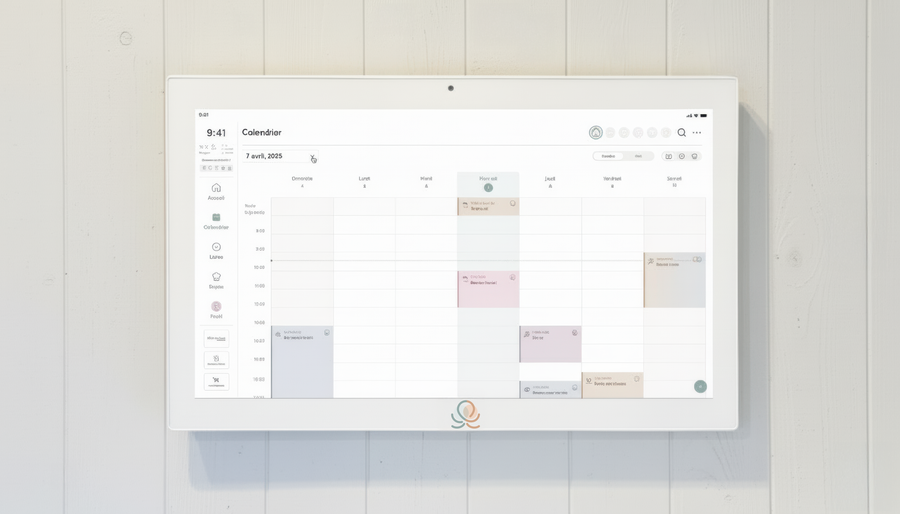
Meals, chores, the calendar and routines for the whole family in one place: on everyone's phone and on the Station on your wall.
The app is free on iOS and Android.