



The benefits of family meetings: an interview with Danielle Jasmin
28 August, 2017
When I first had the idea of holding family meetings at home to make our day-to-day family life easier, I went back to my university books to find THE book that would inspire me! That's how I came to revisit Le Conseil de coopération (“The Cooperation Council”) by Danielle Jasmin, a teaching tool for organizing classroom life and managing conflict. I still remember how excited it made all of us future teachers when it was introduced to us in one of our courses in the bachelor's program in preschool and elementary education. Our adaptation of it here at Les Belles Combines, the Family Meeting workbook, was the perfect excuse to meet Ms. Jasmin and talk about it! Fair warning: the interview that follows is very likely to make you want to try family meetings at home!
Ms. Jasmin, your book Le conseil de coopération, a teaching tool for organizing classroom life and managing conflict, was published 20 years ago. Could you briefly remind us what a cooperation council is?
The cooperation council is a weekly meeting (or twice-weekly with younger children) where all the children get together with their teacher to talk about their life together in that mini-society we call the classroom.
-
We propose projects: What name should we choose for our class? How can we get to know our neighbourhood better? What activities should we do for Halloween?
-
We decide on our classroom rules: I raise my hand when I want to speak, I wait my turn, I use an I-message to say how I feel, I apologize or make amends if I hurt someone, I help anyone who needs it, etc.
-
We look for solutions to problems together: Tidying up takes too long, some children are complaining about bullying, there's too much noise during workshop time, etc.
Les Belles Combines adapted your book to create the Family Meeting workbook. In your view, what are the benefits of this tool?
-
First, parents show their children that cooperation, honesty, kindness, helping one another, sharing and self-expression, among others, are values that matter. Children get to live these values in concrete ways, which helps them make those values their own.
-
It makes family life much more pleasant, because the family is run democratically and more humanely, without authoritarianism or, at the other extreme, permissiveness. At home, you notice less yelling and fewer squabbles, more politeness, parents who are less worn out, kinder children, etc.
-
It takes some of the weight off parents' shoulders, because chores and responsibilities are shared. Above all, parents don't have to solve every problem themselves. Children learn to take responsibility and go from “whining” to suggesting solutions.
Here's a concrete example of how a family meeting works in practice:
A child comes to complain to his dad that his big brother always hogs the TV remote. Instead of stepping in, the dad can simply say: “I can see you're really frustrated. I understand that it's really unpleasant. Why don't you go and write on the sheet for our next family meeting: ‘I want to talk about the TV remote.’ We'll look for a solution together. In the meantime, until the family meeting can help you, try to find a solution yourselves.”
-
It builds tolerance for frustration, because a child who demands an immediate answer or intervention from a parent will have to put off having that need met until the next family meeting. If it's urgent, the parent can step in and make a decision, but should make it clear that it's only temporary until the next meeting, which will make the final decision.
-
It lets you check in regularly on how the family is doing: - What's going well? - What's going badly, a little or a lot? (Let's not mince words!) - What family project could we take on?
What advice would you give parents who'd like to try family meetings?
- Take the time to talk it over with your partner and, above all, to read up on the subject. You obviously wouldn't plan a trip to Walt Disney World on the fly. In the same way, your first meeting needs to be prepared if you want to reach your goal of making family life more pleasant and less exhausting.
- Before you start holding family meetings, take stock together over dinner: taking turns, everyone names one thing that's going well at home and then, in a second round, one thing that's not going so well. It feels good to see both sides of family life. You can then tell the kids that next Sunday at 10 a.m. (for example), you'll hold a meeting to find solutions to whatever isn't going very well.
At your first meeting, let your children know that:
- You'd like to hold a short weekly meeting to talk about family life and make decisions together so that things are more pleasant for everyone.
- It's called “holding a family meeting.”
- You're doing it because you believe that cooperation, discussion and respect are better ways to make life at home more pleasant.
- Start with a fun topic: decide together on your next outing or day off, your next movie night, a weekend visit to the grandparents, decorating the house for a party, etc. Then move on to a topic that could make family life more harmonious, such as sharing chores.
- Stress that decisions are made by consensus, not by majority vote; a vote wouldn't make sense in a family with 4, 5 or 6 children. Agreeing to a consensus means that even if you don't really agree with the proposed solution, you agree to try it for a week or two because you want things to go better for the family.
- Accept a not-so-realistic (but acceptable) suggestion from a child to build their confidence and show your goodwill.
- Give yourself permission to make mistakes, because we now know that making mistakes is one of the best ways to keep developing our intelligence! Admitting you were wrong sets a great example for your kids. I always say that if you want to be perfect, you'll have to move to the Planet of Perfect People! For me, striving for perfection or wanting to give 110% isn't one of my values. But doing your best? Now that's a YES!
How would you describe the difference between helping one another and cooperating?
We help one another when we put our talents or skills at each other's service. For example, while I'm replacing an electrical outlet, my partner makes the meal. We also help one another when we share household chores. Tidying your room, putting away your toys, clearing the table: that's not cooperating, but it's a big help to the family.
We cooperate when we work together toward a common goal. So if your kids want to build a fort out of the cardboard box the new fridge came in and they all work on it together, that's cooperation. If everyone helps get the picnic ready so there's more time to play in the park before eating, that's cooperation too.
What do you say to parents who feel they don't have time to set up this kind of system at home?
Every week, how many hours of your life do you spend refereeing conflicts, repeating the same instructions, doing chores because they didn't get done or settling squabbles? At least 15 minutes a day?
Experience shows that the 30 minutes a week you spend in a family meeting will eventually give you more free time. You also want to promote the values you care about. And you want to raise engaged, caring and responsible citizens who come up with solutions instead of complaining. But above all, holding family meetings will let you live in a household with fewer blow-ups and more politeness and harmony. Conflicts won't stop, because we're not robots. But squabbles will be handled differently, with children expressing their feelings more and more instead of using hurtful words or judgments. It's an investment in the short, medium and long term.
You're retired now, but if you had to do it all over again, would you adopt the same values and cooperative approaches?
Absolutely. The values of cooperation, respect, responsibility and helping one another, among others, are an integral part of my daily life; I couldn't live without them. I see the effect of active listening on the people around me, from my family members to my friends, not to mention the window washer, my little niece's teacher or a party organizer, for example. I want to live in a world where these values are shared by more and more people.
Would you like to try family meetings too? Subscribe to our Magazine and download your workbook, and you'll also find suggested topics to discuss every month!
***Our thanks to Danielle Jasmin, a Quebec teacher who devoted her life to children. Ms. Jasmin is the author of Le Conseil de coopération (Éditions La Chenelière), a book written for the classroom in which she updated the principles of Freinet pedagogy. Her book was a major inspiration for our publications.
Would you like first access to all the content published in the Magazine each month, plus our Toolbox, which includes, among other things, free downloads that are as practical as they are fun? Subscribe to Belles Combines Magazine today!
Put these tips into practice
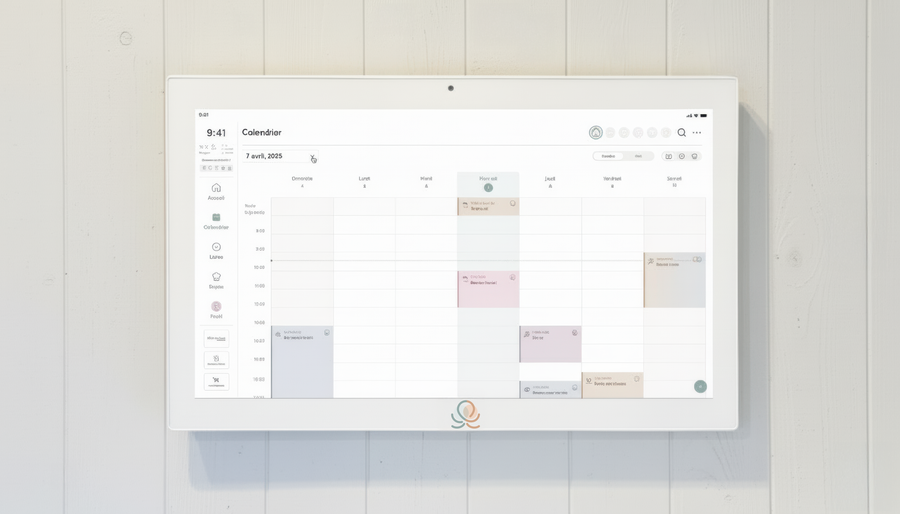
Get the whole family organized with Octave
Meals, chores, the calendar and routines for the whole family in one place: on everyone's phone and on the Station on your wall.
The app is free on iOS and Android.