



The perfect routine doesn't exist: flexibility vs. structure
15 October, 2025
Do you often feel like daily life lacks flow, that you spend most of your time repeating the same instructions, that you absolutely have to stay on your kids' tails at all times so they get through the various steps of their daily routines? This article will give you some possible solutions for routines that work and will finally let you lighten your family's daily life in concrete ways!
Routine vs. rigid schedule: a difference that matters
Before diving into the art of creating effective family routines, it's important to clear up a common confusion that often causes parents a lot of unnecessary stress: the difference between a routine and a rigid schedule.
So, while a routine is simply a sequence of actions that follow one another in a logical order, a more rigid schedule tends to dictate precisely when to do things, regardless of the context and the reality of the moment. The problem with this second way of operating is that you quickly become a slave to your clock and an anxious guardian of the time ticking by, dragging your family into a permanent race against the clock.
The solution: a flexible routine
To avoid falling into this trap, it's best to adopt flexible routines that also meet the following criteria:
- A predictable sequence
- Consistent steps
- A logical link between the actions
- The eventual achievement of a goal (getting ready for school, getting into bed, leaving the house, etc.)
What does that look like in practice?
If you know your morning routine generally takes about 45 to 60 minutes, you need to allow a window of time (not timing down to the second!) for each step it contains. So if you have to leave for school at 8 a.m., you should start the routine around 7 to 7:15 a.m., knowing that some mornings will go more smoothly while others will be more chaotic!
The goal becomes “complete the sequence before the planned departure time” rather than “each step has to take exactly X minutes.” This approach keeps a reassuring structure in place for kids while fostering their independence, and it keeps the atmosphere pleasant for parents.
What science tells us about routines
Building neural highways
Every time a sequence of actions is repeated, the brain creates and strengthens specific neural connections, which become, with repetition, real highways inside the brain, allowing information to travel quickly and without much effort. While each step of a new routine demands a lot of attention at first, the whole routine can generally be done almost without thinking after a few weeks of practice!
A brain under construction
Since children's prefrontal cortex is still developing (all the way into the mid-twenties), adopting routines lets them make up for their difficulty with planning, organizing and resisting distractions, functions that are still immature at a young age.
On top of all these scientifically proven benefits, routines help a child feel safe, notably by letting them place themselves in time and anticipate what comes next. Of course, adopting routines also fosters the development of independence, as well as a sense of responsibility and social skills.
The 80/20 rule
Are you familiar with the famous Pareto principle, which states that 80% of results come from just 20% of the effort? So, when it comes to routines, it's better to set the goal at an 80% success rate than to expect the child to do every step of their routines perfectly. Even with a lower goal, the child will make the routines their own and be able to do them without reminders after a few weeks of practice.
The Les Belles Combines methods
The paper method
To help a child follow their various daily routines more effectively, nothing beats using tools that let them refer to a visual cue whenever they feel the need. To do this, using our routine charts paired with our magnetic pictograms designed to match the child's age is a practical, fun way to get kids doing their routines entirely on their own. It couldn't be simpler: when a step is done, the child moves their magnet to the “Done” column and simply moves on to the next one, until the chart is complete!
The digital method
Prefer a digital option that gives you more flexibility and goes everywhere you go? Our Octave app lets you create as many routines as you like, thanks to our feature for building handy, customized lists. Simply add the steps of the morning routine, the after-school routine, bedtime and all those make-or-break moments of the day, and ask your child to check off each step as they complete it, until the whole routine is done!
The diagnosis
Once you've put a routine system of your choice in place, take the time to assess at which step the difficulties come up. Does your child take too long to eat their breakfast? Do they still have trouble getting dressed? Do they always forget to empty their lunch box when they get home from school? Take the time to find the reasons behind the difficulties and put concrete solutions in place to fix them, whether by giving the child more support with the steps in question or by motivating them with positive reinforcement methods.
Taking action
If you haven't already, now is the time to choose the routine system that best fits your family's reality, and put it in place! Take the time to explain it to the whole family and give your kids a few weeks to get used to it and build their independence in doing their daily routines; don't forget to celebrate the small victories!
Put these tips into practice
Get the whole family organized with Octave
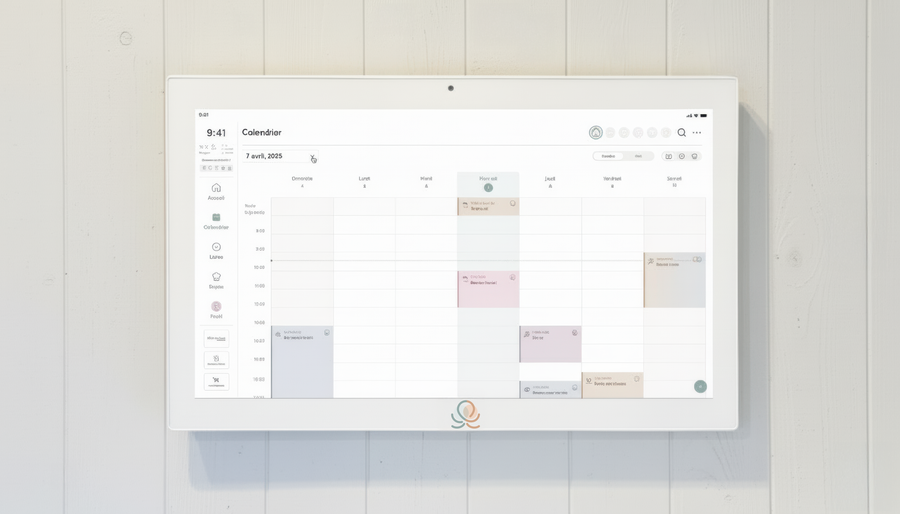
Meals, chores, the calendar and routines for the whole family in one place: on everyone's phone and on the Station on your wall.
The app is free on iOS and Android.