



You and me, anxiety: tips for taming it and helping your anxious child
12 February, 2018
I don't know about you, dear parents and educators, but I feel like I've been hearing more about anxiety over the past few years. Maybe it's because we take it less lightly than we used to, we listen a little more when children talk about their emotions, and education has changed over time, so we pay more attention to it, for the good of young and old alike. Because the distress little ones can go through is quite similar to what teenagers, and even adults, experience. Anxiety is not trivial, so it's important to look into it, to find solutions as parents and to defuse some of the situations that add spice to our daily lives.
What is anxiety?
At its core, everyone experiences anxiety and has fears. And that's normal (and healthy), because anxiety is a feeling that helps protect us from danger. A lion heading toward us or a fire breaking out in our house pushes us to move and react in order to avoid real danger. For children, we can compare it to a smoke detector that goes off when there's smoke, or an alarm that sounds to tell us to be vigilant and protect ourselves from the source of the danger.
But anxiety can also work against us and keep us from enjoying life and beautiful moments, because our imagination can play tricks on us by creating far-fetched scenarios that are very unlikely to happen (monsters under the bed or a wolf coming into the house), or else our assessment of the danger is completely exaggerated. For example, the odds of my being struck by lightning or my plane crashing are slim, but our feeling of worry is so high that we become almost certain it will happen!
On the other hand, anxiety doesn't usually come out of nowhere. It can be due, for example, to heredity (even though anxiety doesn't show up the same way for every member of a family) or to a significant, traumatic event experienced later on. It can also be something the child observed or heard from an adult who matters to them. Let's not forget that we're role models for our young people and that they learn a tremendous amount by imitating us!
And what else?
Despite themselves, fears and worries can result in low self-confidence and a sense of self-deprecation in young and old alike, because they feel vulnerable, isolated and unable to react appropriately. Unfortunately, too, irrational fears and panics keep them from enjoying life to the fullest and from having experiences that could be enriching and pleasantly memorable.
Why? Because the first reflex of an anxious person is to avoid whatever makes them uncomfortable. They will do everything in their power to get away from new situations (since novelty can be highly anxiety-provoking for anxious little ones), surprises and things they can't control the way they'd like. What's more, as soon as they detect a threat, all their attention goes to that stress instead of to the task at hand or the activity they're doing. Avoidance does reduce stress quickly (but only temporarily!). Here are a few examples of avoidance situations in children:
- Refusing to sleep over at a friend's house
- Not wanting to go on an outing that could be fun
- Avoiding a place where there's an animal they fear
- Not feeling like going to play at the park because there might be spiders
- Objecting to signing up for a class or playing a sport because they're afraid of...
- Refusing to go to class on days with oral presentations or spelling dictations
All these situations we avoid calm and relieve us in the moment, because the unreasonable level of worry goes down, but they keep the anxiety going in the long run. Unfortunately, by avoiding a situation, we feed the fear and our mistaken perceptions. Many people may then experience social isolation and have trouble functioning well day to day.
The trap to avoid, in my opinion, is never exposing ourselves to our challenges and our fears. That could create a vicious circle which, the longer it goes on, will become even more serious. Here are two examples that come to mind:
- Rosalie wasn't afraid of dogs until she heard her aunt say they could be aggressive. Since then, she's afraid to go play at the park or walk down the street, in case she meets a dog. If this circle isn't broken, Rosalie could end up not wanting to leave the house without her parents.
- Simon is going on a trip with his parents. He's thrilled, until he hears his father talk about his fear of plane crashes and his dread at the idea of being confined in one for hours on end. Simon's little internal alarm system has just been triggered, and what used to mean fun and joy for him now means danger and catastrophe.
So, quickly, a sense of distrust can take hold in a child.
What are the signs?
How can I tell if my child is experiencing anxiety? What forms can it take? As I mentioned above, one of the first signs is resistance, a refusal to go somewhere or take part in something (pool, school, party, etc.). Here are other signs that should raise a red flag:- Restlessness
- Sleep problems
- Nightmares
- Fear of losing control
- Fear of going crazy
- Irritability
- Crying
- Feeling misunderstood
- Physical symptoms: headaches or stomachaches, nausea, vomiting, heart palpitations, sweating, chest pain, skin irritation
- Hyperventilation
- Clinging to their parent
- Self-deprecation
As I also pointed out above, the best way to keep this anxiety in place is to avoid the source of “danger.”
So, what are the solutions?
The best trained to equip parents and their children remain psychologists. So I encourage you to consult one to get the straight facts and to fill your toolbox with tips and tools to intervene well, based on your child's profile.
What if we took the time to chat with our child?
Listen to them, let them talk, don't brush off their physical symptoms, because they are very real, and then ask simple questions. Here are examples of conversations you could have with your child. It comes down to questions like:- What's the worst thing that could happen to you?
- What are the chances of that happening?
- What would happen if it did?
- Would you be able to handle it if it happened?
- Could you be exaggerating the situation a little?
If it's hard for your child to express how they feel, they can also draw it.
Relaxation techniques
There are several ways to relax using breathing techniques and relaxation of each part of the body and each muscle (by tensing them very hard and then releasing them, for example). You can find some online or guide your child yourself by giving precise instructions. It will also help them get to know all the parts of their body. Yoga can also help your child breathe better and relax before a worrying event.
Expose them, a little, slowly but surely...
To reduce fear and excessive distrust of a situation, it's recommended to have the person face what they fear gently, calmly and gradually. Start with short periods and increase the exposure time when you feel your child is handling their fears better. Above all, congratulate them! With patience, your child will gain confidence. Their distrust may not disappear completely, but they'll get better at handling the moments when anxiety strikes, because they'll know how to go about overcoming it and their reason will win out over their imagination. They'll gain self-confidence at the same time.
A well-established routine
At home, routine and consistency in how we respond remain valuable tools for guiding more insecure children. That said, some flexibility is called for, to show children that unexpected events can happen, but if the basis of the established routine stays largely the same, the child will feel safe and won't tend to have meltdowns. The same goes for the way parents and the other adults around them respond. It's reassuring for a child to be clearly told the consequences of both inappropriate and appropriate behaviour.
What do we avoid?
- Waiting too long to apply a consequence for bad behaviour
- Exposing the child drastically to what scares them (e.g., taking them on the biggest ride at La Ronde, Montreal's amusement park, when they're afraid of going on even one)
- Ignoring their physical symptoms, because they are truly felt
- Overprotecting your child by avoiding anything that triggers anxiety
- Showing exasperation and anger when your child is afraid
- Downplaying the fears your child shares
Would you like first access to all the content published in the Magazine each month, plus our Toolbox, which includes, among other things, free downloads that are as practical as they are fun? Subscribe to Belles Combines Magazine today!
Put these tips into practice
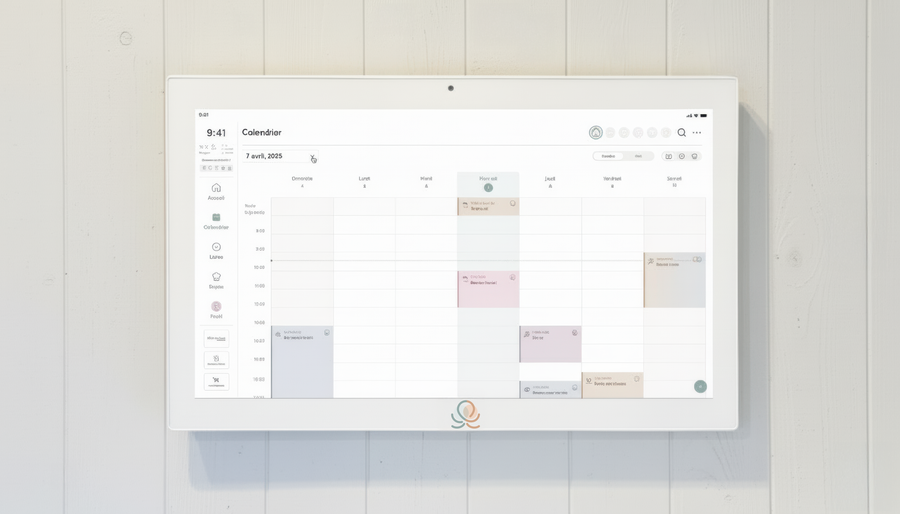
Get the whole family organized with Octave
Meals, chores, the calendar and routines for the whole family in one place: on everyone's phone and on the Station on your wall.
The app is free on iOS and Android.
1 comment
bonjour
l’image sur l’échelle du stress est toute floue sur votre site… où puis-je la retrouver svp?