



5 family productivity strategies
13 October, 2025
As a parent, we know, you're juggling an often endless list of responsibilities: kids, work, home, appointments, activities... and the constant feeling that there aren't enough hours in the day! You often think that, to cope, you'd need to run faster... But what if you actually needed to better orchestrate your family time?
Here are five concrete strategies that will no doubt help you transform your daily life without adding needless stress. These strategies don't require more energy – they simply require reorganizing what you're probably already doing!
Strategy #1: Geographic grouping
The principle: Combine trips that are in the same area to save time and gas.
So instead of doing the grocery shopping on Saturday morning and going back to the same neighbourhood on Tuesday to pick the kids up from their music lesson, plan to do your grocery shopping right before or after the lesson. Since you're already there, why not take advantage?
Other concrete examples:
- Library + park (same area) = combined Wednesday outing
- Pharmacy + dry cleaner + school pickup = same trip
- Kids' dentist appointment + bank errand = same neighbourhood
The trick to making it work: Look at your weekly calendar and identify your recurring trips. Then ask yourself: “What task could I get done while I'm already in this area?” You'll probably be surprised to discover how many unnecessary trips can be eliminated this way!
Strategy #2: Task-grouping days (batch days)
The principle: Concentrate a repetitive task into a single intensive session rather than spreading it out over the whole week.
Never-ending laundry is the perfect example. Instead of doing a load here and there throughout the week, designate a specific day as “laundry day.” Everything gets done: sort, wash, dry, fold and put away. The rest of the week? Don't give it a thought!
Other tasks that are perfect to do in batches:
- Meal prep: Sunday = batch cooking for the week
- Paperwork and admin emails: Friday mornings only
- Lunch planning: Sunday evening for the whole week
- Bills and budget: the first of the month
Why it works: Our brains hate context switching. Every time you start a new task, you lose time getting back into gear. By grouping similar tasks together, you build momentum and work more efficiently!
Strategy #3: Hidden micro-moments
The principle: Make use of the small 10-to-15-minute windows that naturally appear between the events of your day.
Waiting for the kids to finish soccer practice? Fifteen minutes. Arriving 10 minutes early for the orthodontist appointment? Free time. These fragments seem too short to be useful, but added up, they often amount to a few hours each week.
What you can accomplish in 10 to 15 minutes:
- Reply to a few important emails
- Plan the week's meals
- Place an online grocery order
- Sort through a drawer or a shelf
- Make a phone call you've been putting off for days
- Review next week's family calendar
The Belles Combines trick: Keep a list of “micro-tasks” in your Octave app – little things that can be done quickly and anywhere. When a micro-moment pops up, check your list instead of scrolling distractedly on your phone.
Strategy #4: The two-minute rule
The principle: If a task can be done in two minutes or less, do it immediately. Don't schedule it, don't add it to your list and don't put it off until later.
This simple rule eliminates the buildup of little tasks that clutter your mind and your home, since the time it would take to write it on your list could already have been enough to finish it!
Examples of 2-minute tasks:
- Sign a school form
- Hang up a coat that's lying around
- Rinse the breakfast dishes
- Reply to an invitation text
- Put an appointment on the calendar
- Take the meat out of the freezer for dinner
The hidden impact: These micro-tasks create a mental load that's out of proportion to the actual time they take. By knocking them out on the spot, you free up precious mental space and avoid the snowball effect where 20 little undone things turn into a stressful mountain.
Strategy #5: The weekly themed schedule
The principle: Assign a theme or category of tasks to each day of the week to create a predictable structure and so reduce decision fatigue.
Instead of asking yourself every day, “What do I need to do today?”, you automatically know where to focus your energy depending on the day.
Example of a themed schedule:
- Monday: Laundry and tidying up after the weekend
- Tuesday: Errands and supplies (groceries, pharmacy)
- Wednesday: Outdoor activities and outings (park, library)
- Thursday: Paperwork and admin (bills, forms, emails)
- Friday: Weekend prep and light cleaning
- Saturday: Family activities and special projects
- Sunday: Planning and preparing for the week
Adapt it to your reality: Your themed schedule should of course reflect your constraints and your needs. If you work full time, your weekly themes will obviously be different from those of a stay-at-home parent. What matters is predictability, not perfection!
The psychological benefit: Knowing that “Thursday = admin day” lets you mentally set aside, guilt-free, the bills and forms that pop up on Tuesday, since you know they have a clearly designated time. This structure significantly reduces the anxiety tied to the endless to-do list!
Les Belles Combines solutions
Each week (or even just once, using a permanent marker), take the time to identify the theme for each day, so that everyone has them clearly in view and can easily refer to them to know which tasks need to be done.
Our virtual family assistant not only identifies tasks that could be grouped together to avoid needless time loss, but also gives you easy access, at any time, to a list of micro-tasks to tackle during micro-moments scattered through the week.
Take action
Gain three to five hours starting this week by putting at least two of these strategies in place! So, which ones will you choose?
Put these tips into practice
Get the whole family organized with Octave
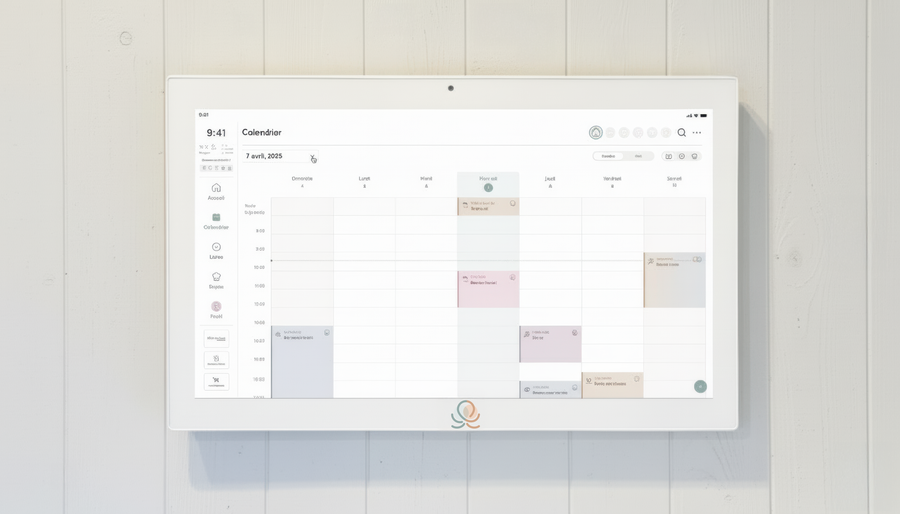
Meals, chores, the calendar and routines for the whole family in one place: on everyone's phone and on the Station on your wall.
The app is free on iOS and Android.