



Evening routine: the anti-battle protocol
12 October, 2025
Like many parents, do you find that the bedtime routine drags on far too often, and are you sick of ending the day on a negative note? Discover our tips for finally making the evening routine peaceful and battle-free, so your day ends gently and beautifully!
The universal template by age (30 minutes flat!)
18 months to 3 years: The “Cocoon” routine
From 7:30 to 8:00 p.m. (or according to your family's schedule)
Step 1 – 5 minutes
Activity: Putting the toys away
Anti-battle tip: Use a visual timer to show your child concretely how much time is left, and use a song, always the same one, to signal that it's now time to stop playing and put the toys away.
Step 2 – 10 minutes
Activity: Bath
Anti-battle tip: Fill the tub with lukewarm water, not hot, and let your child have a maximum of two or three toys to avoid overstimulation. Dim the lights to make the atmosphere more conducive to relaxation.
Step 3 – 5 minutes
Activity: Pyjamas (and a diaper if needed)
Anti-battle tip: Let your child choose their own pyjamas, and always do the same pre-bedtime cuddle ritual (a special kiss, a little massage, etc.)
Step 4 – 8 minutes
Activity: Brushing teeth and hygiene
Anti-battle tip: Use a musical toothbrush that tells your child how long to brush for effective cleaning, and, if possible, brush your own teeth at the same time to set an example.
Step 5 – 2 minutes: Hygiene
Activity: Last bathroom trip
Anti-battle tip: No negotiating, no going back! If your child tries to negotiate, stay neutral and keep following the established routine.
3 to 5 years: The “guided independence” routine
From 7:45 to 8:15 p.m. (or according to your family's schedule)
Step 1 – 5 minutes
Activity: Tidying up
Anti-battle tip: Use a timer and ask your child to race against it! Chances are they'll be super motivated to put their toys away in no time!
Step 2 – 8 minutes
Activity: Shower or bath
Anti-battle tip: To avoid a bath that runs too long every night, wash hair only on even-numbered days (or at whatever rhythm you decide on!).
Step 3 – 5 minutes
Activity: Pyjamas and getting dressed
Anti-battle tip: At this age, children can choose their own pyjamas and can even put them on completely by themselves.
Step 4 – 3 minutes
Activity: Brushing teeth
Anti-battle tip: For effective, thorough brushing, start a two-minute “timer”, using a song of that length or an app designed for the purpose.
Step 5 – 7 minutes
Activity: Story
Anti-battle tip: Read only one book each night, and no more! To avoid endless negotiations, choose the book yourself; that way your child gets to discover a wide variety of stories instead of always reading the same one.
Step 6 – 2 minutes
Activity: Lights out and cuddles
Anti-battle tip: Stick to a steady ritual – three kisses, one hug, and lights out! Once again, no negotiating and no going back.
6 to 8 years: The “full independence” routine
From 8:00 to 8:30 p.m. (or according to your family's schedule)
Step 1 – 3 minutes
Activity: Packing the backpack and laying out tomorrow's clothes
Anti-battle tip: Give your child a checklist of the different steps they need to complete, so they have a visual aid when needed and can build their independence.
Step 2 – 7 minutes
Activity: Shower or bath
Anti-battle tip: Let your child shower or bathe completely on their own, and only check when they get out that they've washed properly.
Step 3 – 3 minutes
Activity: Pyjamas
Anti-battle tip: Lay out the clothes in advance so your child simply has to put on their pyjamas, with no questions or negotiation possible!
Step 4 – 3 minutes
Activity: Brushing teeth and hygiene
Anti-battle tip: Set a timer for the time needed for optimal brushing, and do a quick check once your child has finished the job.
Step 5 – 10 minutes
Activity: Quiet reading (alone or with a parent)
Anti-battle tip: Set a timer that clearly shows the time allowed for reading, and don't allow even one extra minute, to avoid endless negotiations.
Step 6 – 4 minutes
Activity: Chat about the day
Anti-battle tip: Ask your child to tell you about one good moment from the day and one difficulty, so you can follow up if needed and, at the same time, teach them to express their emotions.
The 3 non-negotiables
1. Brushing teeth
Why:
- Cavity prevention: dental health is a very important part of overall health, and preventing cavities is of course an integral part of it, since cavities bring pain and expense if they appear.
- The importance of hygiene: a hygiene routine established at a young age is a long-term lesson that will serve your child their whole life.
Strategies if your child resists:
- Use a musical electric toothbrush: besides being fun, it lets your child know exactly how long they need to brush.
- Brush your teeth at the same time as your child: it models the correct way to brush.
- Use a reward chart: give your child a sticker each time they brush well without protest, and let them choose a small reward or privilege at the end of the week once they've earned all their stickers.
- Let your child choose the toothpaste: because kids like having some control over their routine, let them pick from two toothpaste options.
2. Pyjamas
Why:
- Putting on pyjamas is an important neurological signal that tells the body it's now time to get ready for sleep.
- For hygiene reasons, changing clothes between day and night helps children understand the idea of “dirty” clothes and “clean” clothes.
Strategies if your child resists:
- Let your child choose their pyjamas from two options: this gives them a feeling of control over their routine.
- Lay out the pyjamas before the bath: this avoids the chaos of a last-minute hunt for pyjamas.
- Add a playful touch: turn getting dressed into a game, for example by asking your child to put on their pyjamas as fast as possible or to do it like an animal.
3. A consistent bedtime (with a variation of 15 minutes at most)
Why:
- The circadian clock, the body's natural 24-hour biological rhythm, sets itself according to the regularity you establish. So if bedtime drifts too far from the usual time, the shift can carry on for at least a full week, which can really throw off the established routine.
- A lack of sleep can have significant consequences for your child, and for you as parents too: irritability, trouble at school, a weakened immune system, etc.
Target times by age, according to pediatric recommendations:
- 18 months to 3 years: bedtime 7:30 to 8:00 p.m., wake-up 6:30 to 7:00 a.m. (11 to 12 hours of sleep in total)
- 3 to 5 years: bedtime 8:00 to 8:30 p.m., wake-up 6:30 to 7:00 a.m. (10 to 11 hours of sleep in total)
- 6 to 8 years: bedtime 8:30 to 9:00 p.m., wake-up 6:30 to 7:00 a.m. (10 hours of sleep in total)
The visual contract technique
What is it?
An illustrated routine chart created WITH your child, displayed at their eye level, that replaces the parent's thousand and one verbal reminders.
How to create it:
Step 1: Draw 6 to 8 steps of the routine together
• Your child draws, or glues on pictures you've printed in advance.
• Number each step together.
Step 2: Display the chart in a strategic spot
• Ideally, put the chart in the bathroom or in your child's bedroom, so they can easily get to it.
Step 3: Check off each step
• Your child can choose to tick off each step when it's done, move a magnet or sticker into a “Done” section, or simply circle the step they're currently working on.
Why does it work?
- Your child becomes an active participant in their routine and gets the sense of control they're looking for when they tick off each completed step themselves.
- Conflicts happen less often, since all you have to do is ask your child to look at their routine when they seem unsure what to do next, instead of constantly repeating what comes next.
- A clear, accessible routine lets your child know exactly what's coming, which reduces their anxiety.
- Of course, giving your child a visual aid to help them carry out their routine lets them build their independence, a valuable asset.
Screen alternatives: gradual weaning over 4 weeks
You probably already know this, but screens before bedtime aren't recommended, for children and adults alike. The blue light that screens give off blocks melatonin (the hormone that helps you fall asleep) and stimulates the brain, and on average it delays falling asleep by 30 to 60 minutes. So to help the pre-bedtime routine go smoothly, make sure there's no access to any screen for at least one hour before bed.
Are your kids already hooked, and you'd like to change their habits? Here's a four-week weaning plan to help.
Week 1: Shorten gradually
Goal: go from X minutes to a maximum of 20 minutes
- Five minutes before screen time ends, warn your child with a timer.
- Replace the rest of the time you'd normally spend in front of screens with a quiet activity, such as drawing or blocks.
The script: “Screens end at 7:00 now. What do you want to do after: blocks or colouring?”
Week 2: Move it earlier in the evening
Goal: finish screens by 6:30 to 7:00 p.m., before the evening routine starts
- Introduce a transition activity, such as a snack or some outdoor play time.
Week 3: Introduce irresistible alternatives
Try these activity suggestions to find THE thing that captivates your child and makes it easier for them to set screens aside:
- Reading together: suspenseful books, serialized stories
- Short board games: Uno, Spot It! (Dobble)
- Quiet creative activities: colouring, play dough, origami
- Soft music: listening to audio stories, nursery rhymes
- Imaginative play: dress-up, theatre, puppets
-
Extended bath: bubbles, toys, dimmed lights
Week 4: A stable, screen-free routine
- Your child should now have understood that after 7:00 p.m. (or whatever time you've set), it's quiet-play time.
- If your child still asks for screen time, simply remind them of the new routine.
- Take the time to celebrate your successes!
The parents' evening routine
Why your routine affects your children's
Children are true emotional sponges, so they feel it when you're stressed or agitated, often by resisting at bedtime. Adopt a calm, predictable attitude yourself and they'll definitely be more relaxed; the routine will be much easier as a result!
Your parallel routine while the kids do theirs
- Put your phone away in a drawer.
- Dim the lights throughout the house to create a soft atmosphere.
- Use a lower voice and slower movements to model the calm you expect.
- Play soft music, or opt for silence (and definitely no TV on in the background!).
- Above all, don't answer work emails, scroll through your Instagram feed or discuss tense topics with your partner during the kids' routine.
In conclusion, the evening routine is not a quality parent-child moment where everything is flexible. It's a functional protocol that's essential to the health of the whole family. Cuddles and connection should come before the routine, while the routine itself should be a sign of caring efficiency.
The Belles Combines solutions
To make the routine easier and help your child build independence, use our little routine chart; displayed in plain sight in a strategic spot, it will let your child follow, on their own, the different steps they need to complete before bed.
Our virtual family assistant automatically reminds you when to start the routine based on each child's age; no more letting it slip by!
Take action
Starting tonight, put the 30-minute routine suited to your child's age into practice!
Put these tips into practice
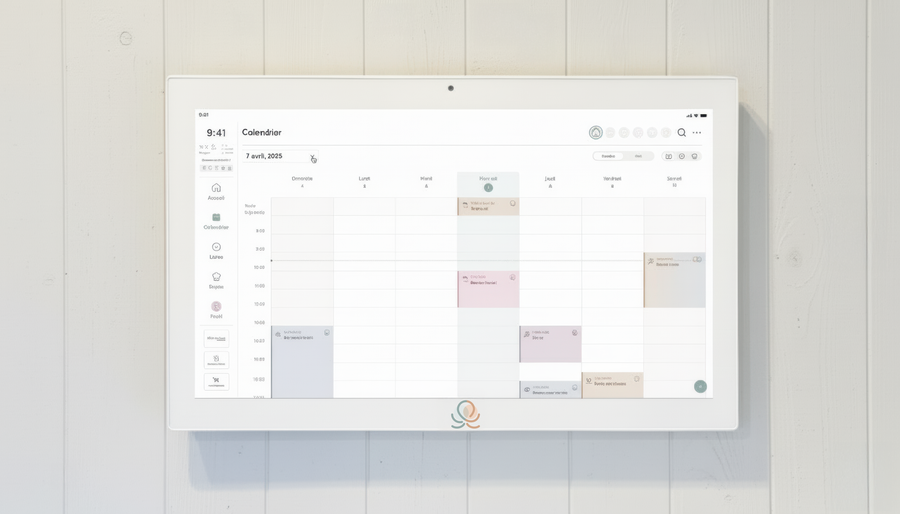
Get the whole family organized with Octave
Meals, chores, the calendar and routines for the whole family in one place: on everyone's phone and on the Station on your wall.
The app is free on iOS and Android.