


When the whole family shares the mental load: practical tools to finally make it happen!
14 December, 2022
Fanny Britt's Quebec essay “Les Retranchées” (written in French) really struck a chord with me! English-speaking families might try All the Rage: Mothers, Fathers, and the Myth of Equal Partnership by Darcy Lockman, which also explores mothers, family life and the mental load. I love hearing about the reality of other mothers, how they experience motherhood and family life, and what their daily challenges and worries are. We are all so different! One thing seems to unite us, though: the weight of the mental load. As Fanny Britt so aptly put it in her essay, no one can take away this “emotional anchoring”! We seem to be wired to be more “haunted by past mistakes, current imperatives and worries to come” than our partners. Still, we can certainly offload some of it by sharing part of that load, not only the household tasks but also the organization of them!
It's one of the causes Les Belles Combines champions. As soon as I had kids, like most mothers of my generation, I thought about stimulating them, making them independent, capable of planning, seeing things coming and getting tasks done. In my case, I think about it constantly: the occupational hazard of a teacher who is always seeing opportunities to stimulate children! Honestly, I set up monthly and weekly planning tools for that sole purpose. Quite naturally, the mental load got shared among the family members and I became much more relaxed! As time went on, I became more and more aware that our children would one day become fathers and mothers themselves, and that it was our role to raise them with a model of fairness so we could change things a little. As time went on, I also realized that my planning tools, besides stimulating the kids, made possible the balance we're all seeking. So here are 10 tips to put into practice so that the Les Belles Combines family planners let you “set down” your mental load and share it with your family.
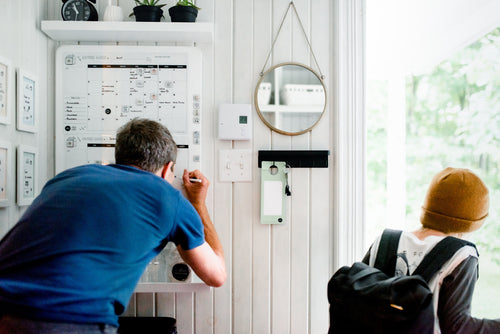
- Our family planners are placed where everyone can see them. At our house, we put up two monthly planners in the entryway and a weekly planner on the fridge.
- Our planners are at just the right height, meaning kids can reach them. All the supplies needed to use them (dry-erase markers, a magic eraser and Magnétos chore magnets) are also accessible to everyone.
- We use two monthly planners so we can “see ahead” to the next two months. For later appointments, I use iCal or a paper agenda.
- On our weekly planner, you'll find the kids' Little Missions as well as the tasks the parents have to do each week. The parent who has the most time available that week takes on more of the tasks. When both of us have very busy schedules, we agree at the start of the week on how to split the tasks.
- On the monthly planner, we've written down five monthly tasks (cleaning the fridge, cleaning the stove, washing the floors, dusting the baseboards and doing the stockpiling grocery run). Once again, depending on the time available, each parent does what they're able to. When both of us are very busy, we agree at the start of the month on how to split the tasks. Find more monthly tasks to do on this handy printable! (Would you like to have access to this list at all times, right from your phone? Get it for free in our Octave app!)
- Every morning, the oldest moves the little “today” star on the family planner before leaving for school. That way, everyone can easily get their bearings and see the upcoming events, even the youngest.
- Every evening, when the kids unpack their school bags, they open their school mail folder. Together we check whether there are any important dates (after-school activity, parent-teacher meeting, class activity, permission to bring a toy to class, special snack day, etc.) and we ask the kids to write them on the monthly planner themselves.
- Often, before going to bed, we take five minutes to look at the next day on the weekly planner: what's on the menu, the appointments and activities, and everyone's weekly task. When possible, we let the kids choose when during the day they want to do their task.
- When the kids spontaneously use one of the family planners without being asked, we recognize the accomplishment with a token from the General Store to motivate them to do it more.
- When either parent needs to book an appointment, they must check the monthly planner first to make sure they find the best time for it. That spares us from having overloaded weeks packed with appointments and activities.
If you're the partner who tends to keep everything in your head, insist that everyone get in the habit of using the planners and, above all, be persistent. The habit won't form in a few days but over the course of months. Trust me, everyone will benefit!
Would you like first access to all the content published in the Magazine each month, plus our Toolbox, which includes free downloads that are as practical as they are fun? Subscribe to Belles Combines Magazine today!
Put these tips into practice
Get the whole family organized with Octave
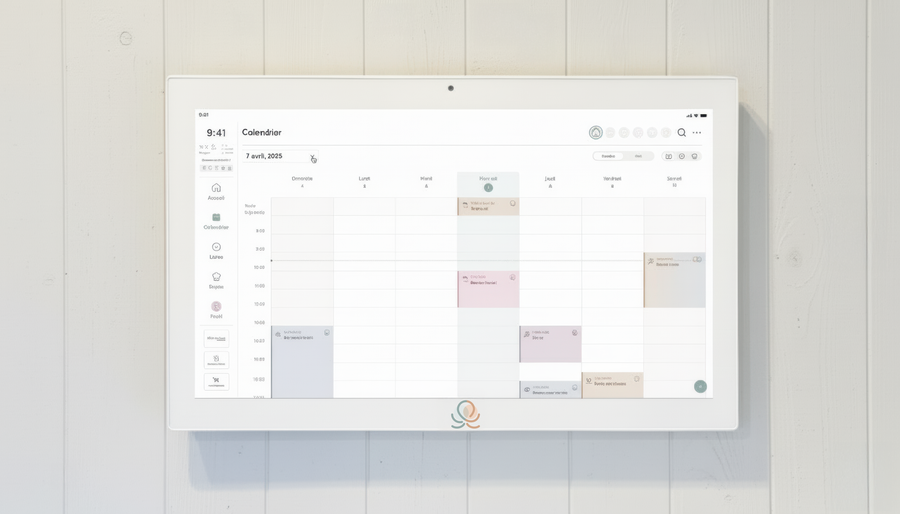
Meals, chores, the calendar and routines for the whole family in one place: on everyone's phone and on the Station on your wall.
The app is free on iOS and Android.